How to Vixie? Make a Continuous Lark's Head knot?
If you're ready to add movement, rhythm, and bold texture to your macramé, the Continuous Lark’s Head Knot is your next adventure. This technique creates a beautiful flowing pattern — perfect for those big wall hangings, free-spirited bags, or pieces that feel like a journey in every strand. In this step-by-step tutorial, you’ll learn how to keep your knots even, your pattern smooth, and your creativity flowing. Whether you’re crafting in your cozy corner or out on the road, this knot adds that handcrafted magic with a sense of motion and freedom. Pack your cord, follow the rhythm, and let's weave something wild.
KNOTS TUTORIALS
Vixie Macrame
6/7/20254 min read
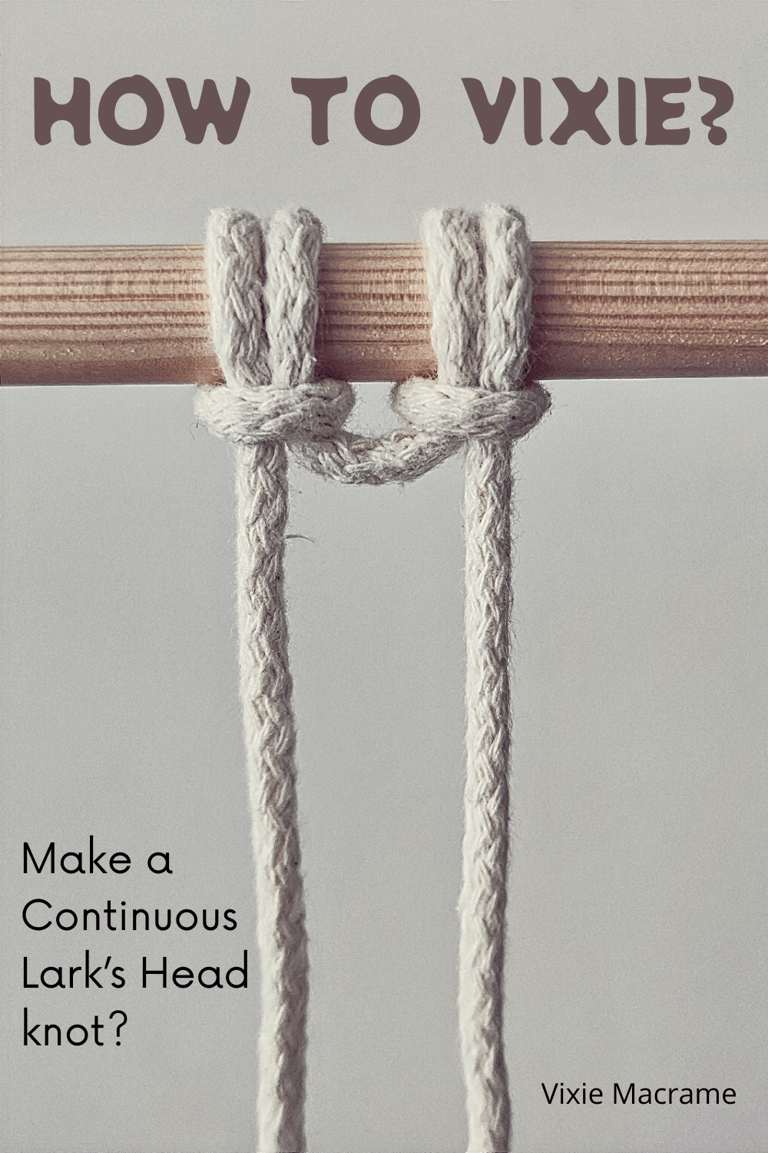
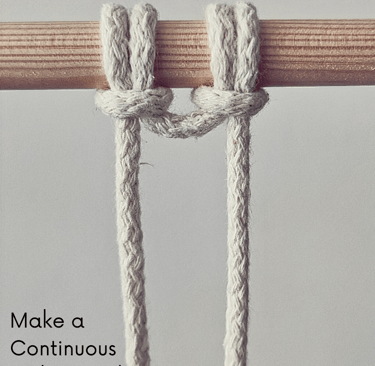
The Continuous Lark's Head knot is a simple yet versatile technique that allows you to attach cords or threads seamlessly in macrame projects. It creates a consistent series of knots without needing to cut or tie each one individually. Mastering this knot will expand your crafting options and speed up your work.
You’ll find that the Continuous Lark's Head knot provides a clean, uniform look while maintaining strong connections between cords. It works well on different bases, helping you customize your designs easily. Learning this knot gives you a reliable foundation for many macrame patterns and styles.
If you want to create polished, professional-looking macrame pieces efficiently, understanding the Continuous Lark's Head knot is essential. This tutorial will guide you step-by-step, so you can incorporate this knot confidently into your next project.
What Is the Continuous Lark's Head knot?
The Continuous Lark's Head knot is a variation of the standard Lark's Head knot that allows you to work with a single cord, creating a series of connected loops. It streamlines attaching cords to a base while maintaining tension and alignment.
Understanding its background, advantages, and practical uses will help you decide when and how to apply this knot effectively in your projects.
Origins and Uses
The Continuous Lark's Head knot stems from the basic Lark's Head, or Cow Hitch, which is a simple knot used to attach cords to objects. This variation was developed to enable the use of a single continuous strand rather than separate cords.
You can position this knot around dowels, rings, or other cords, making it versatile for varying base shapes. Its development mostly relates to macrame jewelry and decorative crafts, where minimizing cord ends improves efficiency.
Because the knot forms a linked chain of looped knots, it fits well in patterns requiring repeated attachments without retying each segment. This continuity supports neatness and structural consistency.
Advantages Over Basic Lark's Head
The key benefit of the Continuous Lark's Head knot is that you work with one cord instead of multiple separate lengths. This reduces material waste and speeds up your process since you don’t have to cut or tie each cord individually.
You gain greater control over tension across all loops, ensuring an even, uniform look that is harder to achieve with multiple cords. The knot also secures tightly without slipping, maintaining structure in pieces that undergo movement or wear.
Another advantage is ease of adjustment; since the loops are interconnected, you can slide sections to realign them or tighten the entire row efficiently. This flexibility is less practical with basic Lark's Head knots tied individually.
Step-by-Step Continuous Lark's Head knot Tutorial
You will need a clear setup, the correct starting technique, and a method to extend the knot continuously. Properly finishing the knot is essential to keep your work neat and secure.
STEP 1
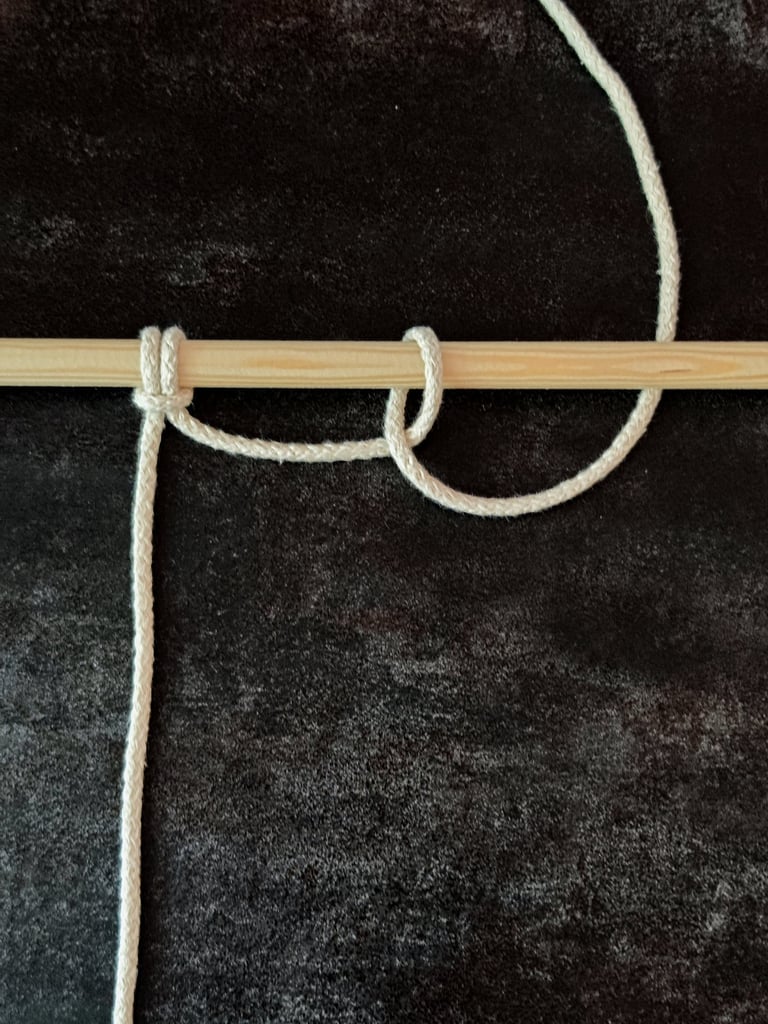
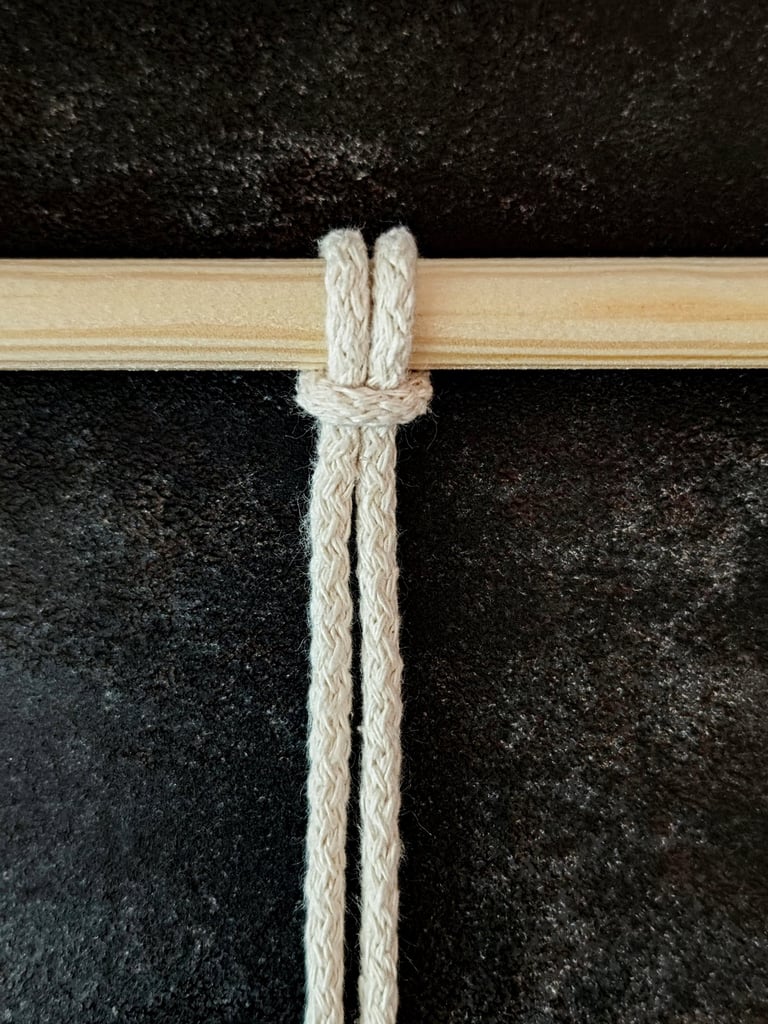
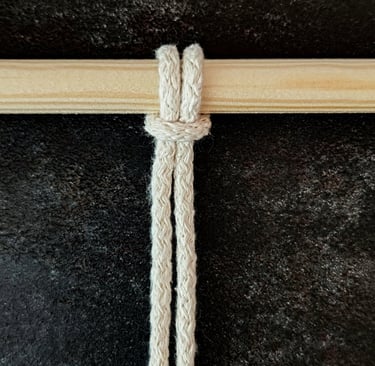
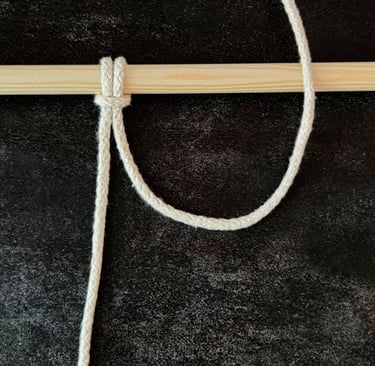
First tie a Lark’s Head knot, leaving one end longer (the one that you are extending - in this example we will go to the right).
STEP 2
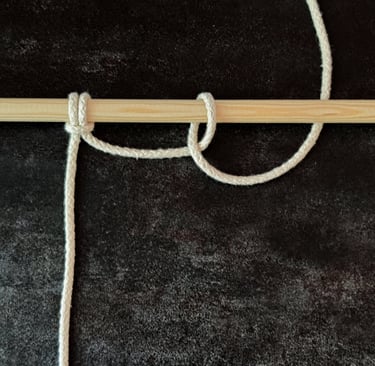
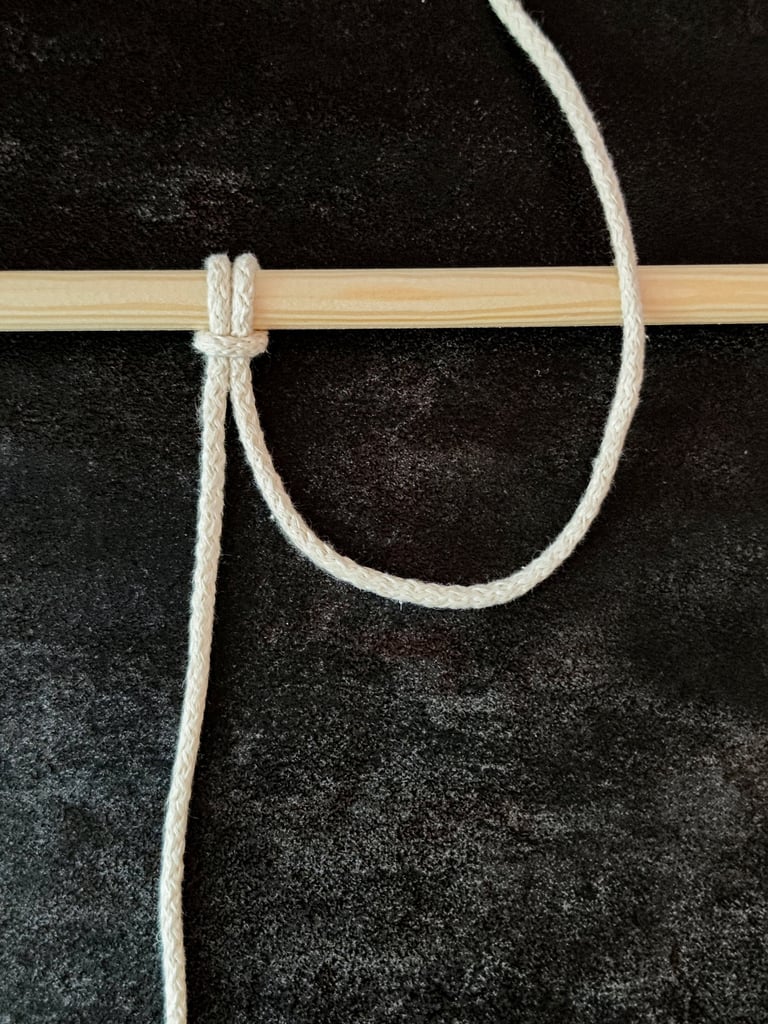
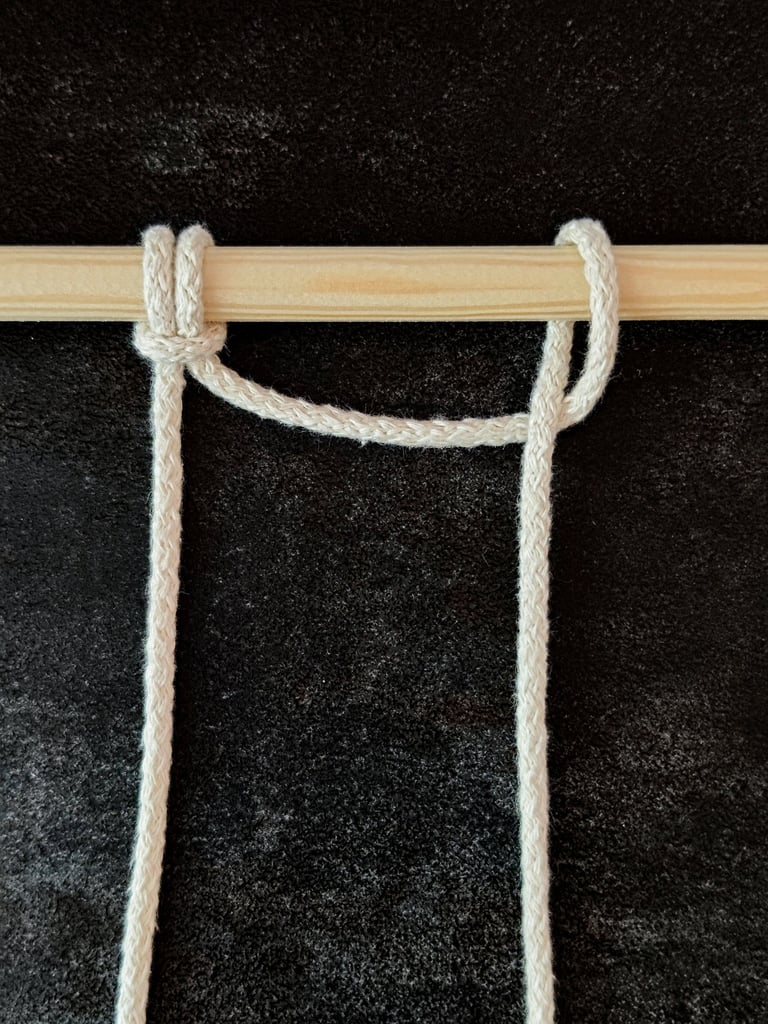
Bring the right cord up and over the wooden dowel rod.
STEP 3
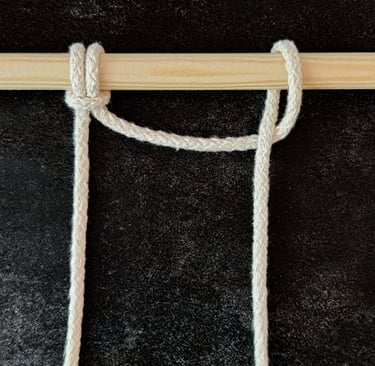
Wrap it around the dowel and with the cord's end go through the loop you just created on your left.
STEP 4
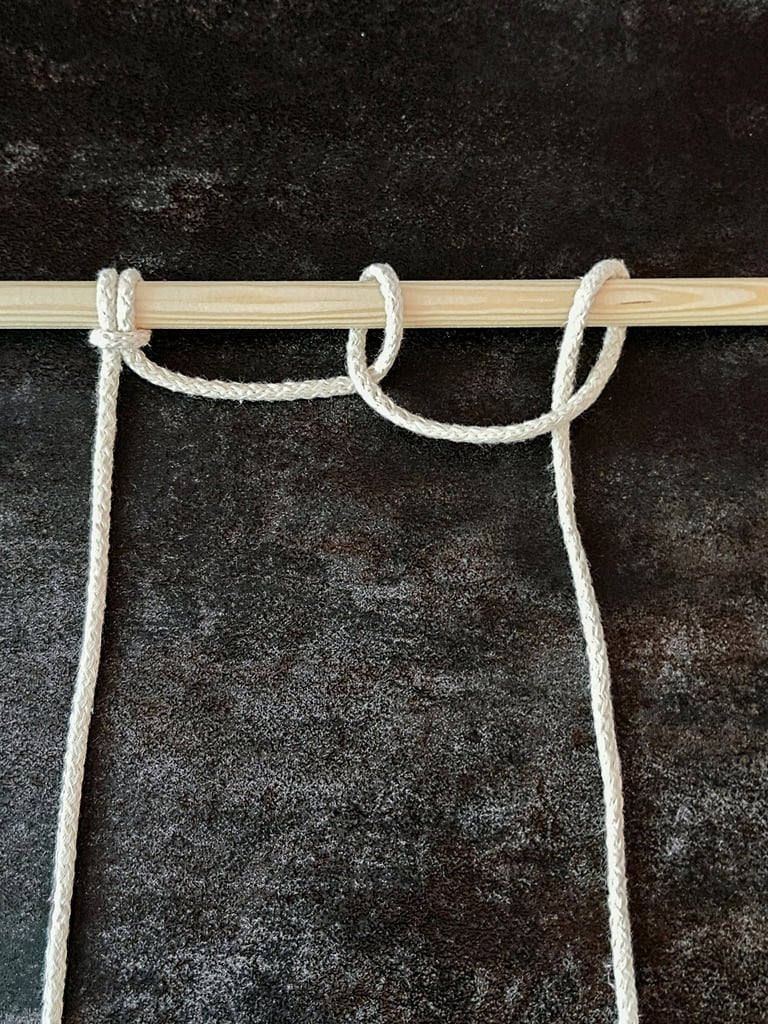
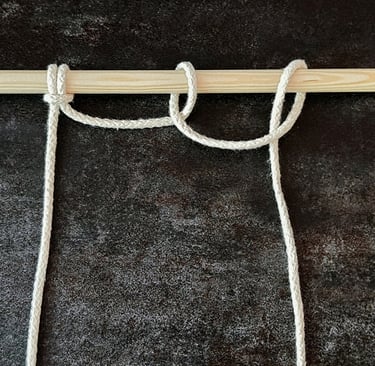
Bring your right cord up and under the wooden dowel rod, leaving a small loop on the bottom.
STEP 5
With the cord's end go across the dowel and down through the loop you just created on the left bottom side.
STEP 6
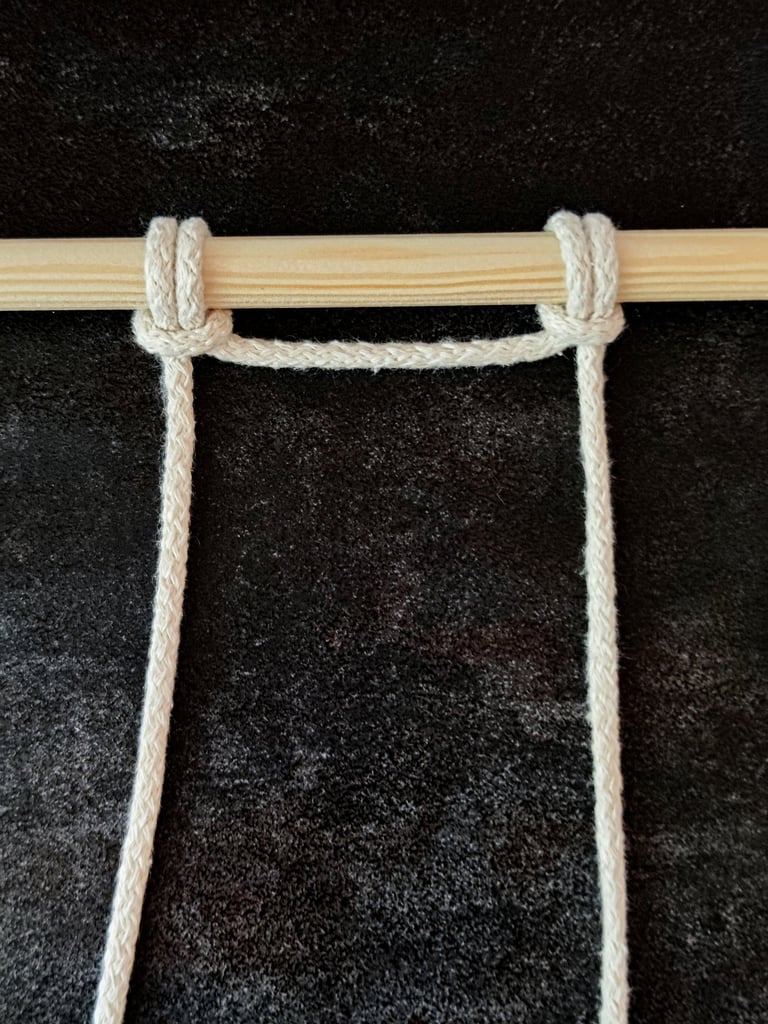
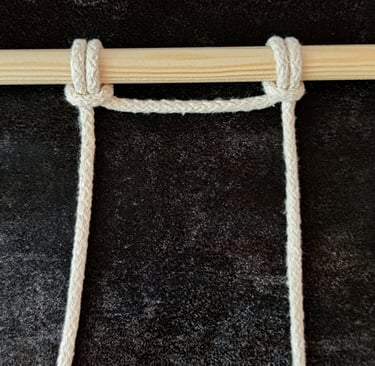
Pull on the cord to tighten the knot.
A consistent Continuous Lark's Head knot relies on steady tension, avoiding typical errors, and following beginner-friendly techniques. Paying close attention to these details will improve the appearance and durability of your macramé pieces.
Maintaining Tension
Keeping even tension is critical for neat knots. You want to pull the cord firmly but not too tight, which helps maintain uniform size across knots.
Use your non-dominant hand to hold the base cord steady while pulling the working cords through the loop. This prevents the knots from slipping or loosening unevenly.
If the tension varies, knots can appear lopsided or loose, affecting the overall pattern. Practice with scrap cord to develop a feel for consistent pulling without overstretching.
Using tools like clips or clamps to hold your project steady can also aid in tension control during longer sessions.
Avoiding Common Mistakes
One frequent mistake is twisting the cord incorrectly before tightening the knot. Make sure the loop stays flat and doesn’t twist to keep the knot smooth.
Avoid pulling the cord unevenly on one side, which causes the knot to skew rather than form symmetrically.
When working continuously, check the orientation of each knot to prevent accidental reversal. This helps keep a clean, linear pattern.
Another error is using cords of uneven thickness or texture, which affects uniformity and tightness. Always match cords in size and material for the best result.
Best Practices for Beginners
Start with longer cords than you think you'll need to avoid running short mid-project. This gives you room to practice without stress.
Work slowly and check each knot immediately after tying it to catch mistakes early.
Use a dowel or ring as a stable base to anchor your knots. This provides a solid foundation to work against.
Label your cords or keep them organized in a sequence to avoid confusion. This approach helps maintain pattern consistency, especially in complex designs.

Continuous Lark's Head to the right
Continuous Lark's Head to the left